Money basics
What Is Compound Interest and Why It Matters
Learn how compound interest works with simple examples. See how $100 can grow to $1,006 and why starting early is the biggest money advantage you have.
By the Euphoria team · 2026-07-14 · 6 min read
Key points
- At 8 percent, $100 left alone for 30 years grows to about $1,006 through compounding.
- With plain simple interest that same $100 would reach only $340, so compounding roughly triples the result.
- The Rule of 72 says your money doubles about every 9 years at 8 percent.
- Time matters more than the amount you start with, so starting early is your biggest advantage.
The one idea that grows your money
Imagine you put $100 into an account that pays 8 percent a year. After one year you have $108. Nothing wild yet. But here is the twist. In year two you do not just earn interest on your original $100. You earn it on the full $108. That extra $8 is now working for you too. This is compound interest, and it is the closest thing to a superpower that personal finance has.
Most people think of money as something that just sits there. Compound interest flips that idea. Your money starts making more money, and then that new money makes even more. The longer you leave it alone, the faster the snowball rolls.
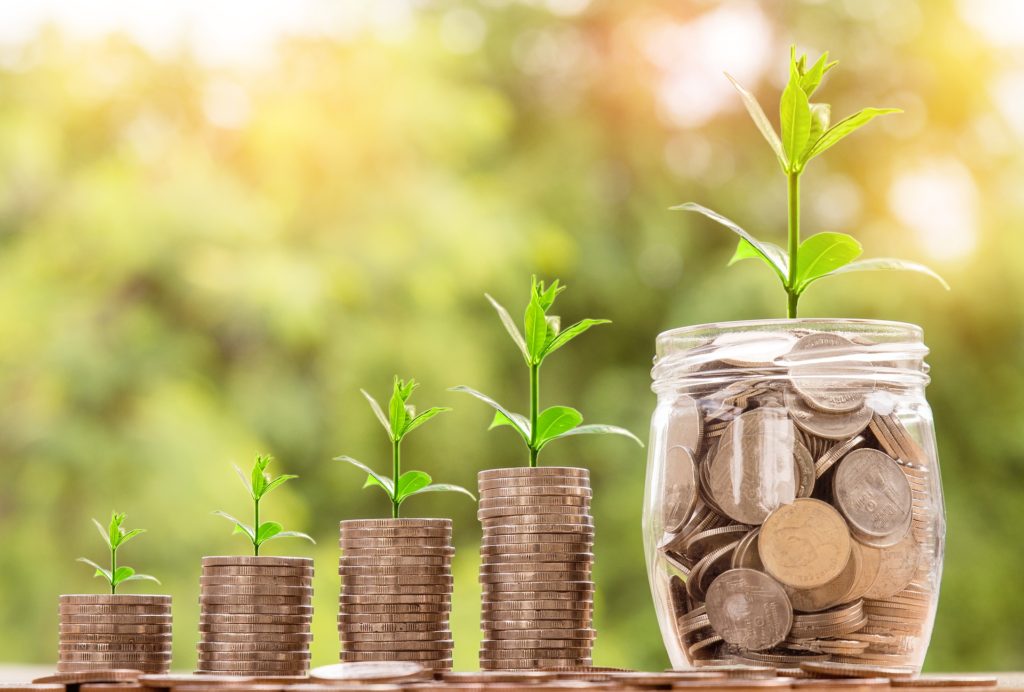
Give your interest enough time and it starts earning interest of its own.
Simple interest vs compound interest
There are two ways interest can be calculated. Simple interest pays you only on your original amount. If you have $100 at 8 percent, simple interest gives you $8 every single year, forever, no matter what.
Compound interest is different. It pays you on your original amount plus all the interest you have already earned. Each year the base gets a little bigger, so each year you earn a little more. Early on the difference looks tiny. Given enough time, it becomes enormous.
A real example with round numbers
Say you leave that $100 alone at 8 percent for 30 years and never add another dollar. With simple interest you would earn $8 a year, so after 30 years you would have your $100 plus $240, which is $340. Not bad.
With compound interest, that same $100 grows to about $1,006. Same starting amount, same rate, same amount of time. The only difference is that compounding let your interest earn interest. That single change turned $340 into roughly triple. The gap keeps widening the longer you wait, which is exactly why people get excited about it.
Time is the secret ingredient
Here is a shortcut called the Rule of 72. Divide 72 by your interest rate to estimate how many years it takes your money to double. At 8 percent, 72 divided by 8 is 9, so your money doubles about every 9 years. Over 30 years that is roughly three doublings, which lines up with our example above.
The big lesson is that time matters more than the amount you start with. A teenager who invests a small amount and leaves it for decades can end up ahead of an adult who invests much more but starts late. You cannot add more years later, so the years you have right now are your most valuable asset.
Why this matters for you
Think about how you spend money now. A pair of sneakers or a stack of concert tickets feels great in the moment. Compound interest asks a quieter question. What could that same money become if you gave it 20 or 30 years to grow? You do not have to skip everything fun. You just have to understand the trade so you can choose on purpose.
The habit that beats everything is starting early and being consistent. Even small amounts, added regularly and left alone, ride the same snowball. That is the whole game.
On Euphoria you can play with compound interest in interactive lessons and watch your own numbers grow, so the idea sticks long before you ever open a real account.