Money basics
W-2 vs 1099: Which One Are You?
Signing a contractor agreement does not make you a contractor. How the IRS really decides, what employee status is worth, and what to do if yours is classified wrong.
By the Euphoria team · 2026-07-24 · 8 min read
Key points
- Classification comes from how the work actually runs, not from the contract, so neither you nor the business can agree your way into contractor status.
- The IRS weighs three groups of evidence: behavioral control, financial control, and the type of relationship, with no single factor deciding the outcome.
- An employer pays 7.65 percent of your wages in payroll tax while a contractor pays both halves at 15.3 percent, and the total collected is the same either way.
- Form 8919 lets a misclassified worker pay only the employee share of Social Security and Medicare instead of the full self-employment rate.
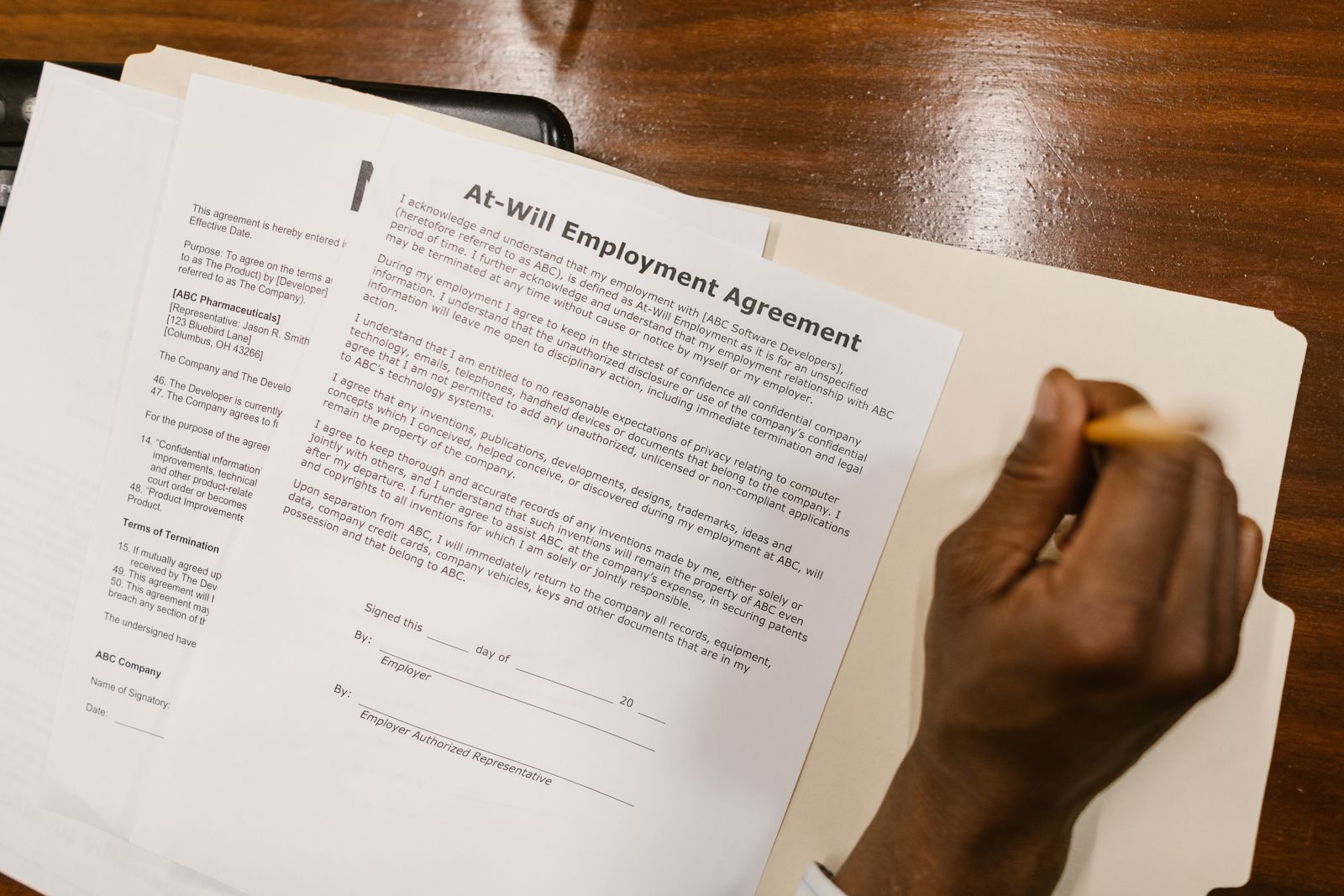
The contract does not decide it
You can sign a document headed Independent Contractor Agreement, be paid per job, receive a 1099 in January, and still be an employee as far as the law is concerned.
This surprises almost everybody, including plenty of the businesses doing the hiring. Classification is not a choice the two sides make and write down. It is a conclusion drawn from how the relationship actually works, and the label on the paperwork is weak evidence.
You cannot agree to be a contractor. Either the facts make you one or they do not.
The rule has to work this way because a protection you can sign away is not a protection. If a sentence in a contract could convert an employee into a contractor, then minimum wage, overtime, and payroll tax would all be optional.
What the IRS actually looks at
The IRS sorts the evidence into three groups. No single item settles it, and there is no threshold number of boxes to tick. The whole picture is weighed.
Behavioral control asks whether the business directs how the work gets done. Set hours, a required location, a prescribed order of tasks, instructions on which tools to use, rules about whether you may send someone else in your place. Training is a particularly strong signal, because a business trains employees and hires contractors for expertise they already have.
Financial control asks who carries the business risk. Who supplies the equipment, who eats unreimbursed costs, whether you can actually lose money on a job, whether you may work for competitors, and whether you are paid a steady amount per period or a fee per project.
Type of relationship asks what the arrangement looks like from outside. Whether it is open-ended or tied to a deliverable, whether you receive benefits an employee would get, and whether your work is a core part of what the business sells.
The useful compression is this: a business may tell a contractor what result it wants. Once it starts specifying how, when, where, and in what order, it is describing an employee.
What employee status is actually worth
The differences are larger than most people assume, and only the first one is about tax.
- Withholding. Your employer calculates and sends federal income tax, Social Security, and Medicare out of each paycheck. A contractor owes the same money, but nobody removes it, so it has to go in as estimated payments during the year.
- The employer's share of payroll tax. An employer pays 7.65 percent of your wages toward Social Security and Medicare on top of what you earn. A contractor pays both halves, 15.3 percent.
- Unemployment insurance. Employers pay federal and state unemployment taxes. Contractors are generally not covered, so work drying up means no income and no claim to file.
- Workers' compensation. An employee hurt on the job normally has a route to medical costs and wage replacement without proving fault. A contractor usually does not.
- Minimum wage and overtime. The Fair Labor Standards Act covers employees, guaranteeing at least the federal minimum wage of $7.25 an hour and time and a half beyond 40 hours in a week. A higher state minimum wins. Genuine contractors get neither protection.
- Benefit eligibility. Health plans, retirement matches, and paid leave go to employees. A contractor is outside the plan by definition.
| Period | Worker pays | Employer pays |
|---|---|---|
| W-2 employee | 7.65% | 7.65% |
| Independent contractor | 15.30% | 0.00% |
Both columns total 15.3 percent of earnings. Classification does not change the bill, only the name on it.
The chart makes the cleanest point in this whole subject. The total tax collected is 15.3 percent either way. Classification decides who receives the bill.
Why misclassification keeps happening
Follow the money and the pattern explains itself. Treating a worker as a contractor removes, all at once, the employer's 7.65 percent payroll tax, the unemployment taxes, the workers' compensation premium, the cost of including that person in any benefit plan, and any liability for overtime.
That is a large share of what it costs to employ somebody, which is why the incentive never goes away and why enforcement exists rather than trusting everyone to classify honestly.
Plenty of misclassification is not a scheme, though. An owner hiring their first helper, who has never read the control test, often reaches for a 1099 because it is simpler. The consequences for the worker are identical either way, which is why the remedy does not depend on proving bad intent.
What to do if you think yours is wrong
There are specific, free routes, and they are not widely known.
Form 8919 is the one worth memorizing. If you were treated as a contractor but the facts made you an employee, this form lets you report that income and pay only the employee's share of Social Security and Medicare rather than the full self-employment rate.
Form SS-8 asks the IRS for an official determination of your status. Either side can file it, it costs nothing, and it is slow, often many months, so it settles an ongoing arrangement rather than fixing one fast.
A wage complaint to the Department of Labor's Wage and Hour Division covers unpaid minimum wage or overtime. It is free, and the Division treats the complainant's identity as confidential.
Your state labor agency is often the strongest route, because several states apply classification tests tougher than the federal one.
One thing does not change while a dispute runs. The income is still taxable and the return is still due, so filing late to make a point only adds penalties.
The forms you will actually meet
In the order you encounter them.
- Form W-4, on your first day as an employee. It tells your employer how much to withhold. It is not a tax return, and getting it wrong produces a refund or a bill at filing rather than a penalty. You can hand in a new one whenever your situation changes.
- Form I-9, also at hire, proving you are allowed to work. Not a tax form at all.
- Form W-2, due to you by 31 January, one from each employer, listing your wages and everything withheld.
- Form 1099-NEC, from each business that paid you as a contractor above a reporting threshold. The threshold sat at $600 for many years before legislation raised it, so look up the figure for the year you are filing.
- Form 1099-K, from payment apps and platforms, reporting the gross amount they processed for you. This threshold has been changed, postponed, and changed again several times.
- Schedule C and Schedule SE, attached to your Form 1040, if you had any contractor income at all.
The trap inside that list is the reporting threshold. A form failing to arrive does not mean the income is untaxed. You owe tax on money you earned whether or not anyone mailed you a document about it, and a great many first-time filers learn this the expensive way.
Being both in one year is completely normal. A summer job on a W-2 plus some weekend contract work on a 1099-NEC is an ordinary tax situation, not a complication.
The part that is genuinely unsettled
Two different agencies run two different tests, for two different purposes, and a worker can come out differently under each.
The IRS uses the common-law control test described above, to decide who owes employment taxes. The Department of Labor uses an economic reality test to decide who is covered by minimum wage and overtime. They ask related questions and can reach different answers, which is not a bug so much as two statutes with different jobs.
The federal wage-and-hour test is mid-rewrite as this is published. A final rule published in January 2024 was challenged in federal court, and the Department subsequently instructed its own investigators not to apply that rule's analysis, relying instead on the longstanding principles in Fact Sheet 13. In February 2026 it proposed rescinding the 2024 rule and replacing it with a streamlined analysis, with the comment period closing that April.
So anyone handing you a confident summary of the current federal standard is describing a moving object. What has stayed stable through every version is the underlying question: how much control does the business have, and how economically dependent on it are you. The weighting of the factors keeps being revised. What the factors are trying to detect has not changed in decades, which is why practical guidance survives the rewrites.
Why this matters for you
Classification is one of the few places where a single administrative fact reshapes everything downstream: your tax rate, your safety net, your right to be paid for hour forty-one. Worth knowing which one you are before you need the answer rather than after.
Euphoria's Money basics track puts you in the chair for this, sorting real-sounding work arrangements into employee or contractor and following each choice through to the forms it generates, so the first time you fill in a W-4 is not the first time you have seen one.
Sources
- IRS, Independent contractor, self-employed, or employee, the common-law control test
- IRS, About Form 8919, Uncollected Social Security and Medicare Tax on Wages
- IRS, About Form SS-8, Determination of Worker Status
- IRS, Self-Employment Tax, Social Security and Medicare taxes
- Department of Labor, Fact Sheet 13, employment relationship under the Fair Labor Standards Act
- Department of Labor, employee or independent contractor classification rulemaking
- Department of Labor, 2026 proposed rule on independent contractor status
- Department of Labor, federal minimum wage